The Bobcat (Lynx rufus) is the most common wildcat in Texas and North America. They are found all over Texas in many different kinds of habitats. The closest relative to the bobcat is the Canadian Lynx which lives mainly in Canada and Alaska.
Texas, the Lone Star State, is an amazing state with over 50 state symbols. This article will not cover all of them, but here are a few honorable mentions: state shoe is the cowboy boot, the state motto is Friendship, the state large mammal is the Texas Longhorn and the state shell is the Lightning Whelk. There are many more, but this issue will focus on some of the more well-known plant and animal symbols.
There are two species of pelican in Texas, the American White Pelican and the Brown Pelican. They are similar in some ways and different in others. Pelicans are aquatic birds that are found near water in coastal habitats, such as the beaches of the Gulf of Mexico in Texas.
There are close to 160,000 different species or types of moth in the world and over 350 species in Texas. This is nearly 10 times more species worldwide than their daytime cousin, the butterfly. Moths are insects, which means they have six legs, and their body is split into three parts, the head, thorax and abdomen. They also have two sets of wings connected to their thorax, known as the forewings at the top and hind wings at the bottom. On their head, they have a large pair of compound eyes made up of thousands of individual eyes called ommatidia (om-uh-tid-ee-uh) and a pair of small simple eyes which can sense light. They have a straw-like tongue called a proboscis (pro-bos-kiss) which they use to sip nectar from flowers and they taste using special structures on their feet. Moths smell using their antennae which are typically long and thin or featherlike. Antennae are one of the ways to tell moths and butterflies apart. Butterflies have club
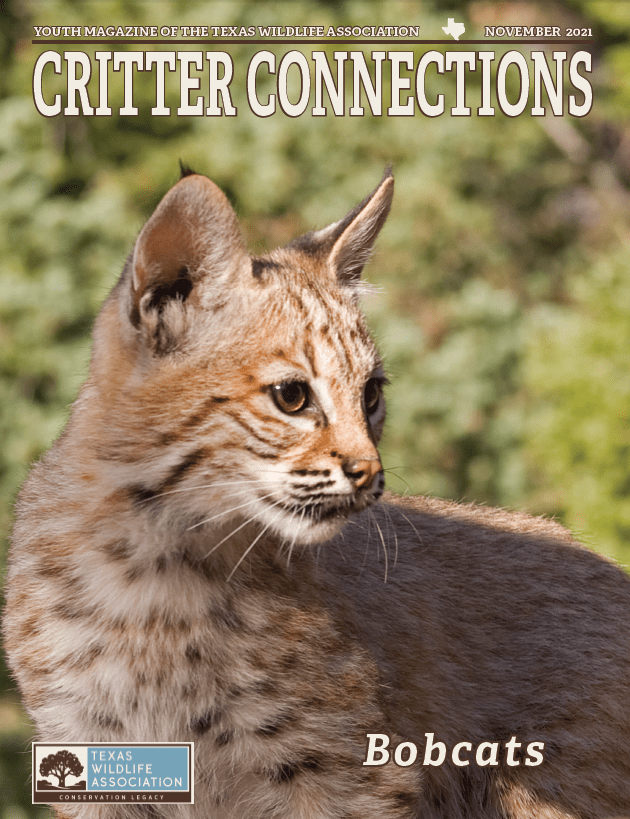 The Bobcat (Lynx rufus) is the most common wildcat in Texas and North America. They are found all over Texas in many different kinds of habitats. The closest relative to the bobcat is the Canadian Lynx which lives mainly in Canada and Alaska.
 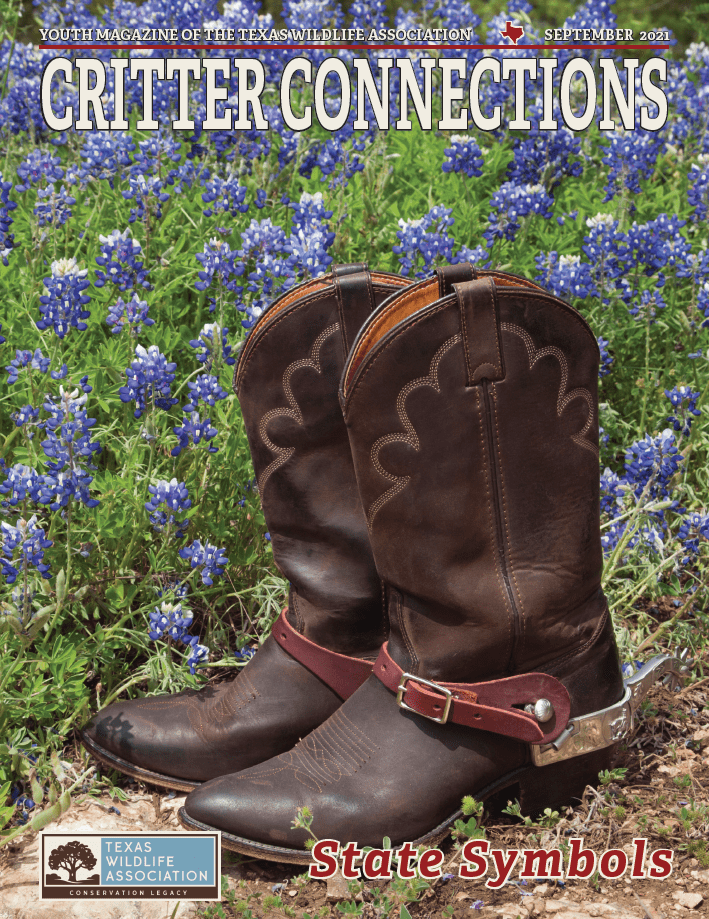 Texas, the Lone Star State, is an amazing state with over 50 state symbols. This article will not cover all of them, but here are a few honorable mentions: state shoe is the cowboy boot, the state motto is Friendship, the state large mammal is the Texas Longhorn and the state shell is the Lightning Whelk. There are many more, but this issue will focus on some of the more well-known plant and animal symbols.
 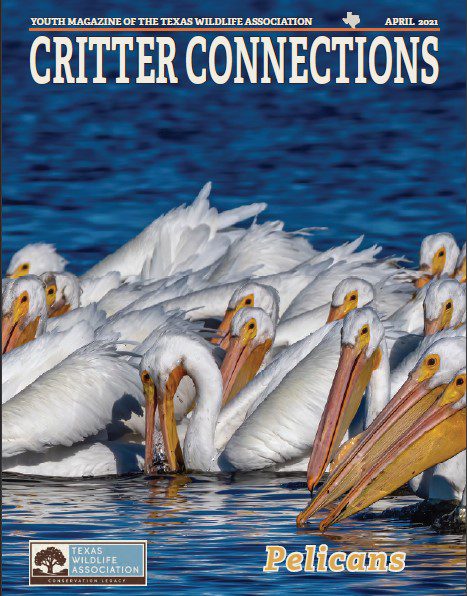 There are two species of pelican in Texas, the American White Pelican and the Brown Pelican. They are similar in some ways and different in others. Pelicans are aquatic birds that are found near water in coastal habitats, such as the beaches of the Gulf of Mexico in Texas.
  There are close to 160,000 different species or types of moth in the world and over 350 species in Texas. This is nearly 10 times more species worldwide than their daytime cousin, the butterfly. Moths are insects, which means they have six legs, and their body is split into three parts, the head, thorax and abdomen. They also have two sets of wings connected to their thorax, known as the forewings at the top and hind wings at the bottom. On their head, they have a large pair of compound eyes made up of thousands of individual eyes called ommatidia (om-uh-tid-ee-uh) and a pair of small simple eyes which can sense light. They have a straw-like tongue called a proboscis (pro-bos-kiss) which they use to sip nectar from flowers and they taste using special structures on their feet. Moths smell using their antennae which are typically long and thin or featherlike. Antennae are one of the ways to tell moths and butterflies apart. Butterflies have club