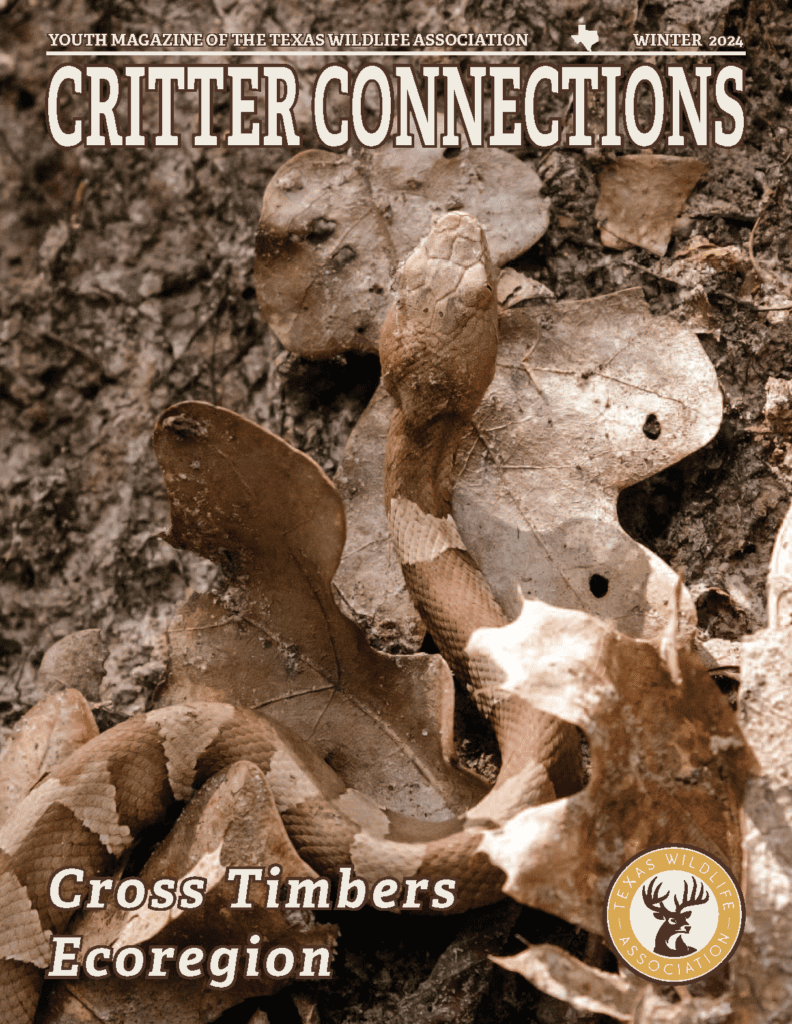
 Texas is home to 10 different Gould’s ecoregions as seen on the map below. Ecoregions are areas of land that share similar climate, topography and soils. In this series, we will dive into each of Texas’ 10 ecoregions one Critter Connections issue at a time. Next up – the Cross Timbers!
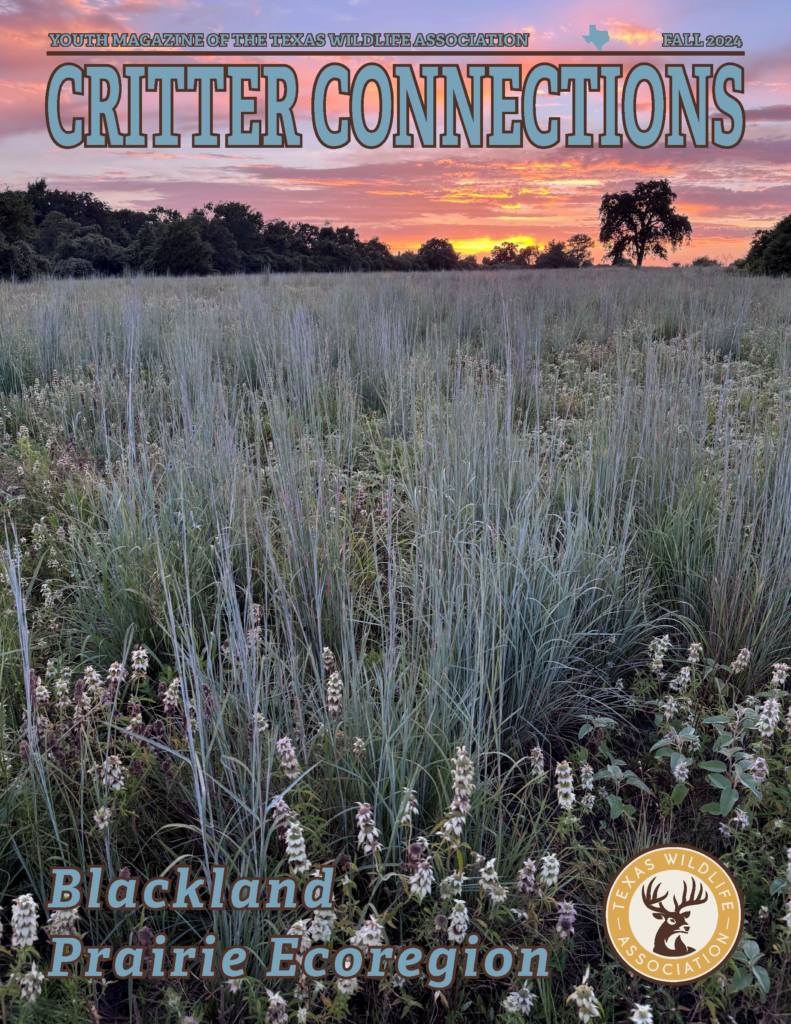 Texas is home to 10 different Gould’s ecoregions as seen on the map below. Ecoregions are areas of land that share similar climate, topography and soils. In this series, we will dive into each of Texas’ 10 ecoregions one Critter Connections issue at a time. Next up – the Blackland Prarie!
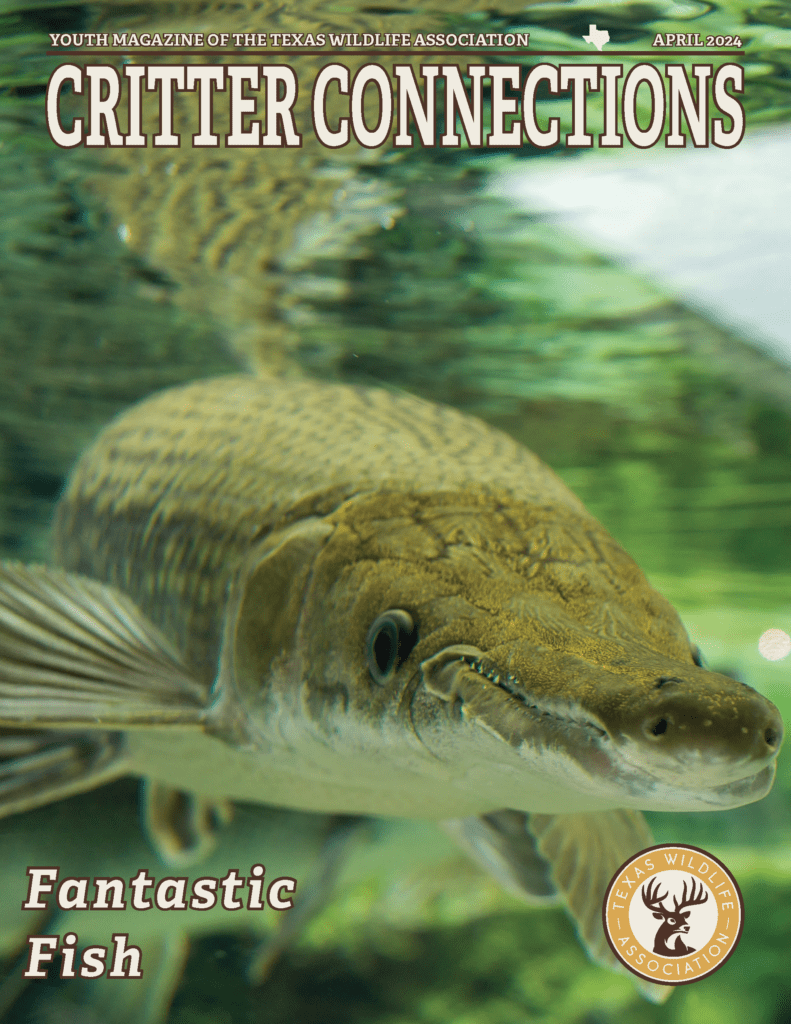 Just under 3% of Texas' land area is covered in surface water, but don't let that fool you. Texas' waterways are full of life - from fish, to salamanders, to turtles and sharks, and even humans. In the spring and summer, you can find Texans passing the time on our state's waterways through activities like fishing, swimming, kayaking, and photography. Texas has many different waterways like streams and rivers, swamps and marshes, bayous and lakes, and even the deep open water of the Gulf of Mexico. No matter how big or small, each water body has different features and characteristics that make up an ecosystem for different plants and wildlife. The critters that live in these waters have certain adaptations that allow them to survive in their environments.
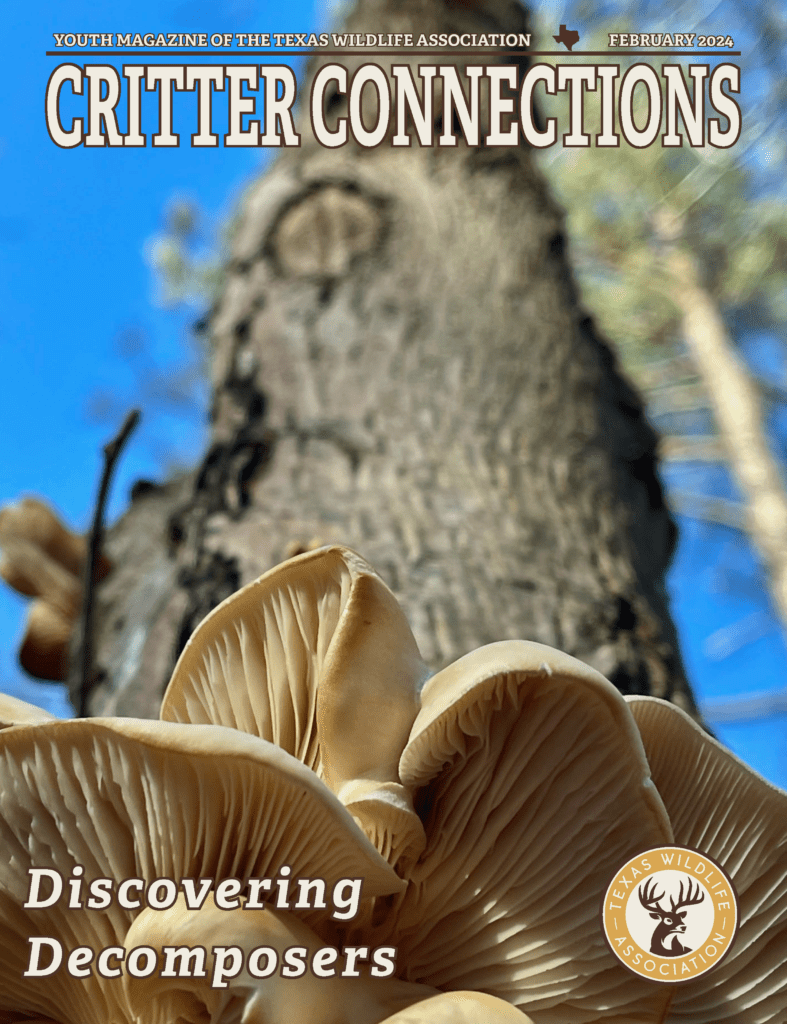 Have you ever seen a worm wiggle in the dirt and wondered why it’s there? What about beetles walking through the leaves on the ground or mushrooms growing on the trunk of a fallen tree? While it may not seem like it, these different organisms all have something very important in common. They are all decomposers, a living thing that breaks down decaying, meaning rotting, plant and animal materials, waste and even garbage.