Texas is home to 10 different Gould’s ecoregions as seen on the map above. Ecoregions are areas of land that share similar climate, topography, and soils. In this series, we will dive into each of Texas’ 10 ecoregions one Critter Connections issue at a time. Next up – the Post Oak Savanna!
After the sun goes down and the stars come out, the world around us comes to life. Nocturnal animals, or animals that are active during the night and sleep during the day, begin their day as the sun sets. Animals can be nocturnal for many different reasons. Some animals are awake at night to hunt because that is when their prey, the animals they eat, are most active. Others are active at night to avoid predators. These animals use adaptations, or characteristics that help the animal live in the dark. Some of the most common characteristics we see are enhanced senses. This includes things like better vision with larger eyes, better hearing or better smell. Animals you may see at night include birds, reptiles, amphibians, mammals and insects! Some animals have changed their behavior to be nocturnal, or active at night, to avoid humans. This includes animals like raccoons, opossums and skunks that live in cities and areas with more people. Some animals are active at night because of other factors, like the temperature. To avoid the summer heat, these animals sleep during the day and move more at night. Animals can be nocturnal for more than one reason! Let’s take a deeper dive into some native Texas nocturnal critters.

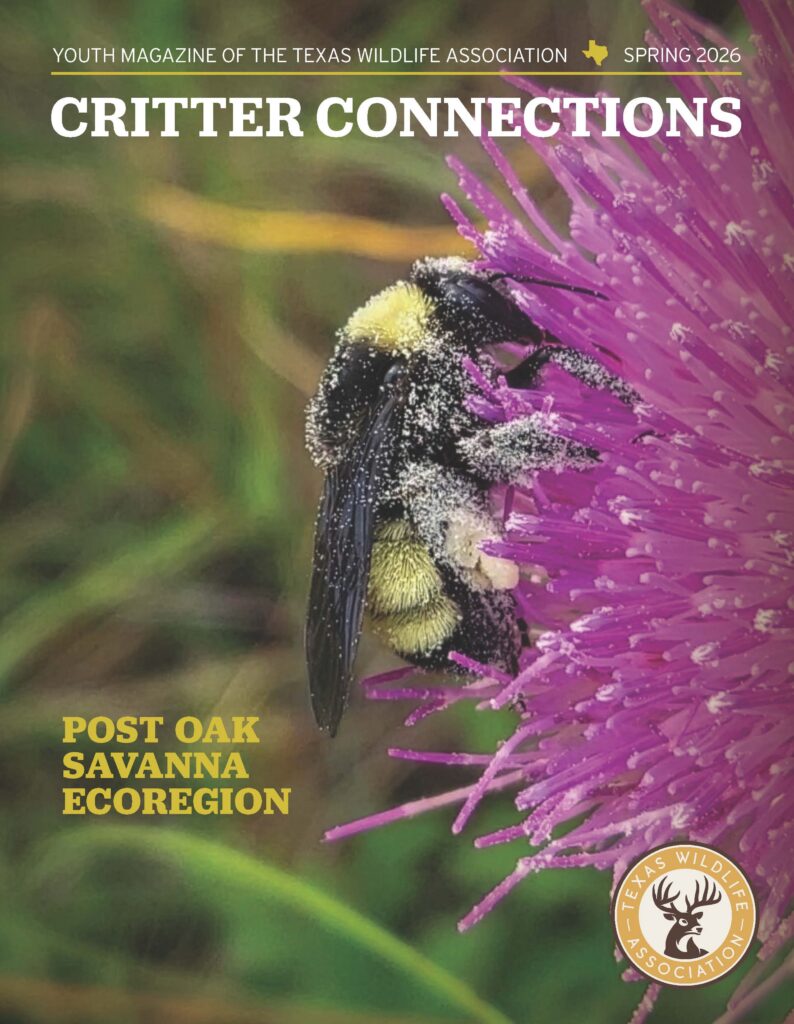 Texas is home to 10 different Gould’s ecoregions as seen on the map above. Ecoregions are areas of land that share similar climate, topography, and soils. In this series, we will dive into each of Texas’ 10 ecoregions one Critter Connections issue at a time. Next up – the Post Oak Savanna!
 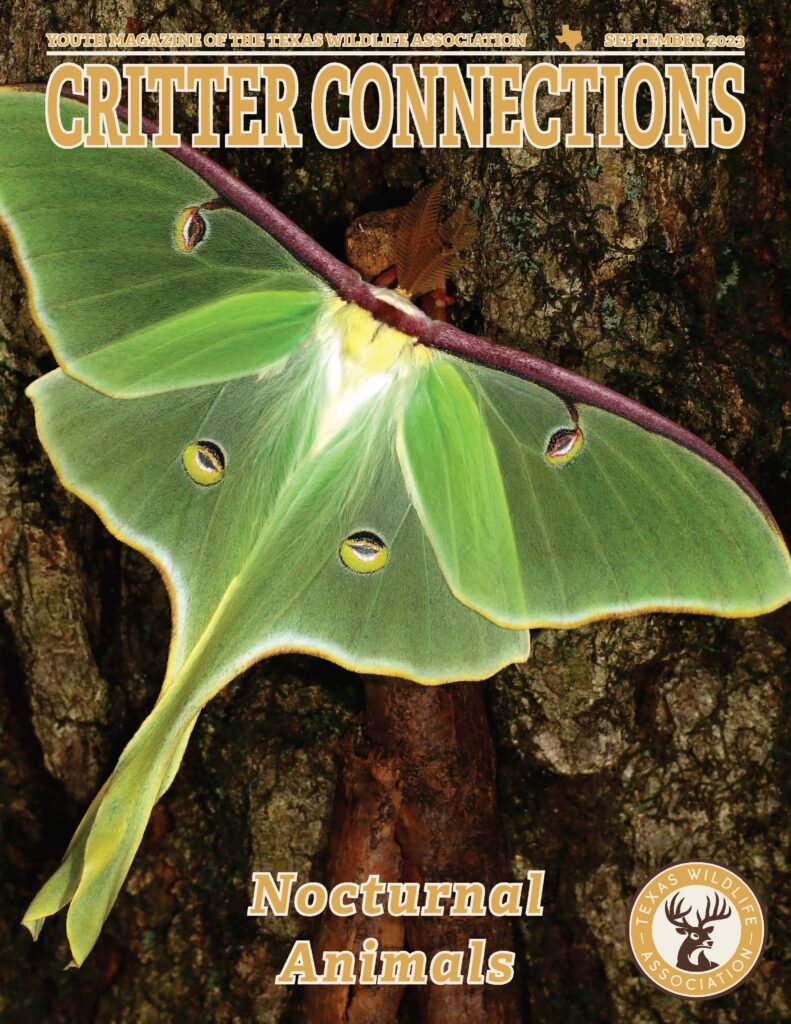 After the sun goes down and the stars come out, the world around us comes to life. Nocturnal animals, or animals that are active during the night and sleep during the day, begin their day as the sun sets. Animals can be nocturnal for many different reasons. Some animals are awake at night to hunt because that is when their prey, the animals they eat, are most active. Others are active at night to avoid predators. These animals use adaptations, or characteristics that help the animal live in the dark. Some of the most common characteristics we see are enhanced senses. This includes things like better vision with larger eyes, better hearing or better smell. Animals you may see at night include birds, reptiles, amphibians, mammals and insects! Some animals have changed their behavior to be nocturnal, or active at night, to avoid humans. This includes animals like raccoons, opossums and skunks that live in cities and areas with more people. Some animals are active at night because of other factors, like the temperature. To avoid the summer heat, these animals sleep during the day and move more at night. Animals can be nocturnal for more than one reason! Let’s take a deeper dive into some native Texas nocturnal critters.