Critter Connections

HOME » PROGRAM AREAS » CONSERVATION LEGACY » YOUTH EDUCATION » CRITTER CONNECTIONS » South Texas Plains Ecoregion

South Texas Plains Ecoregion

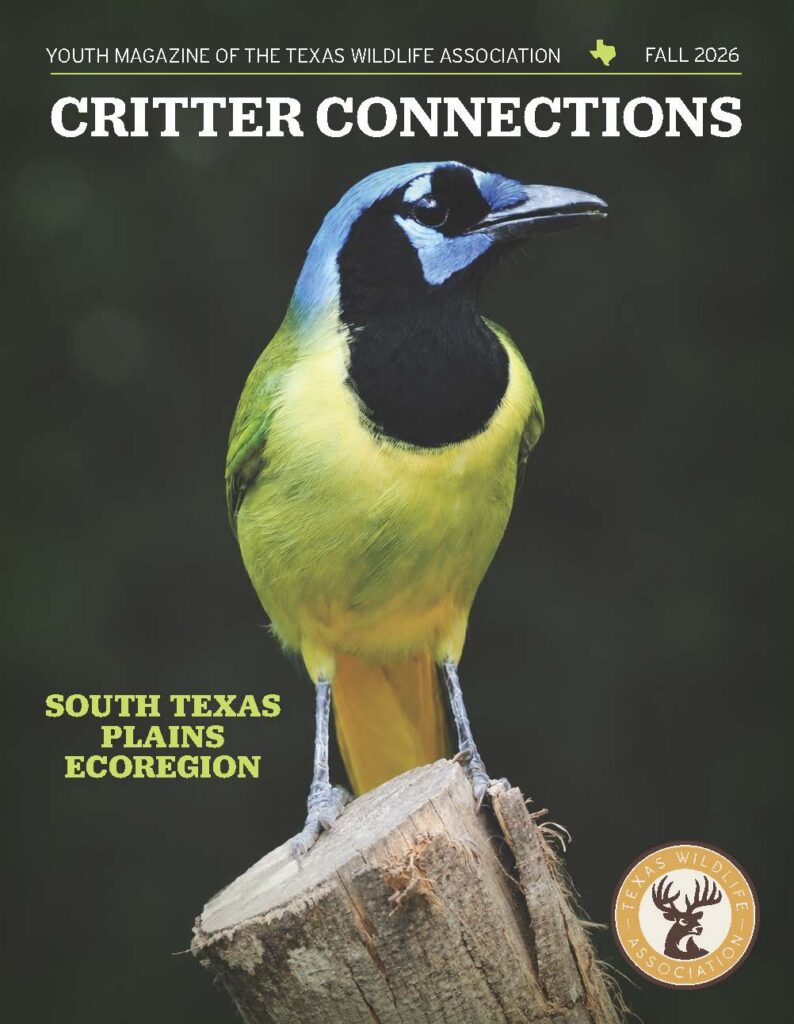
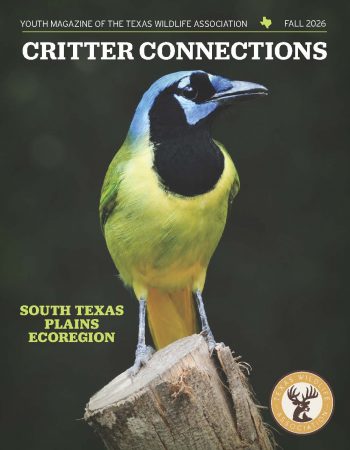
Texas is home to 10 different Gould’s ecoregions as seen on the map above. Ecoregions are areas of land that share similar climate, topography, and soils. In this series, we will dive into each of Texas’ 10 ecoregions one Critter Connections issue at a time. Next up – the South Texas Plains!

READ THE MAGAZINE

Register to Read

Magazine access will be granted immediately upon registration.
Help keep this program free by registering each time the magazine is shown to students/youth.
Lesson Plans

Take your Critter Connections beyond science and reading with additional enrichment resources!
RELATED VIDEO LESSONS

Distance Learning

Bring wildlife into your classroom with on-demand programs designed for K-8 students! Videos are 15-45 minutes long and are available 24/7. All programs include interactive questions and follow-along worksheets that are aligned with the Texas Essential Knowledge and Skills (TEKS) standards.

External Resources

A Green Jay Survey
Answer Key – South Texas Plains Double Puzzle
Bird Inquiry – Read, Observe, Record
Birding in the Brushlands
Discover Bird Migration
Endangered Species of Texas Ecoregions
Gould Ecoregions of Texas
How to Recognize a Texas Tortoise
Keep Texas Wild: Southern Plains
Native Plants of the South Texas Plains Ecoregion
Ocelot Coloring Page
Ocelot Drawing Lesson
Texas Bird Bingo
Texas Ecoregions Activity
The Ocelot and Its Habitat: Classroom Activities
Tracking the Ocelot: Saving an Endangered and Beloved Species

Additional Subjects

Word Bank

Biodiversity:

the variety of plant and animal life in an area

Ecotourism:

travel to responsibly visit natural areas

Habitat Fragmentation:

breaking into smaller pieces

Herbivore:

eats only plant materials

Hybrid:

a mixture of two different species

Range:

area where a species occurs

Scutes:

large scales on the outside of a turtle’s shell

Topography:

an area’s physical shape; for example rivers, hills, and valleys
  • Identify how people in different regions of Texas earn their living, past and present.
  • Explain how physical geographic factors such as climate and natural resources have influenced the location of economic activities in Texas.
  • Identify the effects of exploration, immigration, migration, and limited resources on the economic development and growth of Texas.
  • Explain how developments in transportation and communication have influenced economic activities in Texas.
  • Find your county on the Gould Ecoregion map.
    • Which ecoregion do you live in?
  • Identify, locate, describe, and compare the physical regions of Texas.
    • Examples include Mountains and Basins, Great Plains, North Central Plains, and Coastal Plains.
    • Include characteristics such as landforms, climate, vegetation, and economic activities.
  • Identify cities within the South Texas Plains Ecoregion.
    • Explain the geographic factors such as landforms and climate that influence patterns of settlement and the distribution of population in Texas, past and present.
    • Identify and explain patterns of settlement such as the location of towns and cities in Texas at different time periods.
  • Identify ways in which Texans have adapted to and modified the environment, past and present.
    • Examples include timber clearing, agricultural production, wetlands drainage, energy production, and construction of dams.
    • Explain and compare the positive and negative consequences of human modification of the environment in Texas, past and present.
    • Explain why people have adapted to and modified their environment in Texas, past and present, such as the use of natural resources to meet basic needs, facilitate transportation, and enhance recreational activities.
  • Explain ways in which geographic factors have affected the political, economic, and social development of Texas.
    • Examples include the Galveston Hurricane of 1900, the Dust Bowl, limited water resources, and alternative energy sources.
  • Grades 4 and 7

Bring More Wildlife to Your Classroom

South Texas Plains Ecoregion

READ NOW

Rolling Plains Ecoregion

READ NOW

Post Oak Savanna Ecoregion

READ NOW

Piney Woods Ecoregion

READ NOW

High Plains Ecoregion

READ NOW

Close & Re-Register

South Texas Plains Ecoregion

Texas is home to 10 different Gould’s ecoregions as seen on the map above. Ecoregions are areas of land that share similar climate, topography, and soils. In this series, we will dive into each of Texas’ 10 ecoregions one Critter Connections issue at a time. Next up – the South Texas Plains!